Tuesday, January 14, 2020

Trolley Tuesday 1/14/20: Portland Traction, or PEPCO

They were once cited in "Electric Railroads" magazine as “one of the most progressive interurban lines in the United States today." Sadly, this wasn't enough to save the mighty Portland Traction Company, but as you'll come to find, it never really went away. Welcome to Trolley Tuesday's coverage of the Portland Traction Company, popularly known as PEPCO.

-----
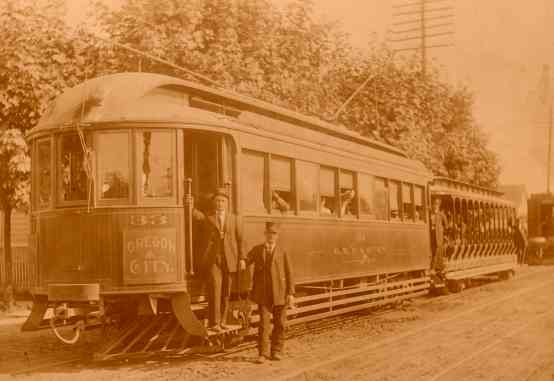
An interurban excursion special in Oregon City, late 1890s
(PDXhistory.com)
The origins of the PEPCO go back to 1891 with the creation of the East Side Railway Company. It wasn't the first street railway in Portland, as covered previously, but it was the genesis for Portland Traction as it gobbled up other local street railways into one massive company helmed under the guidance of Fred Morris. Morris intended the PT to run all the way down to Eugene, Oregon, but faced intense pressure from the competing Southern Pacific, then run by E.H. Harriman. 

Unable to reach the intended destination in Eugene, PT's construction crews instead focused on the line between Lents and Gresham and plans were made to construct a new dam and powerplant (in what is now Cazadaro) to power the new extension. Due to the expansion of services in power delivery as well as rapid transit and real estate in 1902, the East Side Railway was rebranded as the Oregon Water, Power, and Light Company. (OWP&L)

Image result for Oaks Amusement Park 1904
Oaks Amusement Park, circa 1905
(Oregon Live)
Inbetween construction of the new dam, OWP&L continued expansion into Sellwood, Boring (with a new power station), and Troutdale by 1905. Money was also invested into popular destinations, as Oaks Amusement Park opened under the company in 1904 to bring more money in on the weekends. A spur and balloon loop around the park was also constructed, which the current Oregon Rail Historical Foundation (ORHF) uses a section of today.

In 1906, the OWP&L was sold to several interested parties, including the Milwaukee Road (who wanted the Troutdale Branch to reach Portland), Oregon Electric (who wanted the Oregon City branch for the same reason), Portland Railway (wanting the street railways in downtown), and Portland General Electric (PGE, wanting the Cazadaro powerplant on the Clackamas River.) In the end, Portland GE and Portland Railway would have joint ownership of the OWP&L, becoming the Portland Railway Light & Power Company. (PRL&PCo.) Still with us? Just checking.

Image result for Portland Railway Light and Power
Portland Railway Light & Power Logo
(Wikipedia)

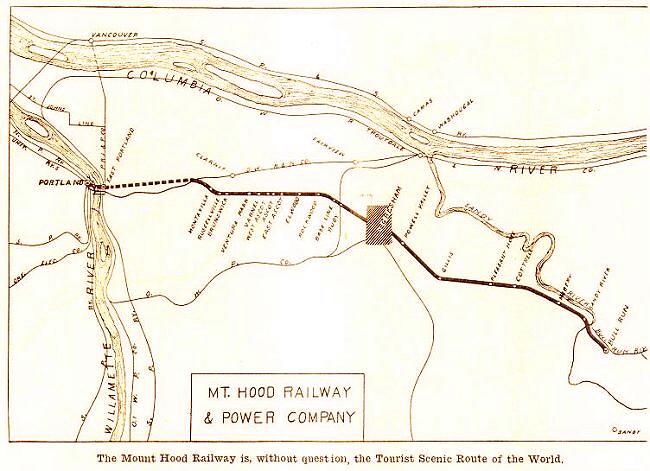
Image result for Mt. Hood Railway and Power
Mt. Hood Railway and Power Map
(PDXhistory.com)
The first couple of years were confusing for the new company, as the former OWP&L lines were run seperate from the new PRL&P consolidated lines. A shift in management in 1908 made for smoother running and in 1911, the new Mt. Hood Railway and Power Company branch opened with the intention to reach Idaho (of all places.) Ultimately, the railway ended in Bull Run, Oregon, and all holdings were sold to PRL&P via PGE in 1912.

Between 1912 and 1924, the PRL&P ran like any street railway in the US did in the early 20s: a huge spike in passenger traffic, then a long descent in profits onces people started buying automobiles. By 1924, PRL&P needed reorgnization due to multiple financial problems and was then reorganized and branded into Portland Electric Power Co, or "PEPCO". Or just the "PEP". Further reorganization included rehabilitation of still-used trolley systems and new passenger buses.
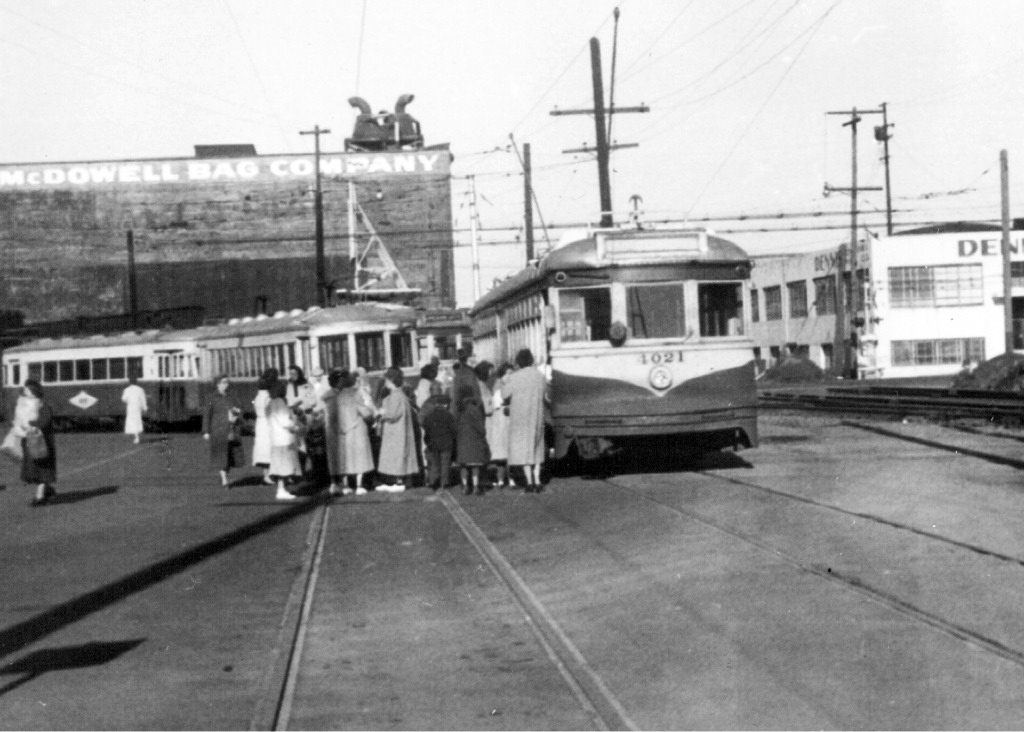
Image result for Portland traction PEPCO
Portland Traction (PEPCO) cars outbound for Oregon City.
Wait, is that a Hollywood Car?
(AmericanRails.com)
The Stock Market Crash of 1929 forced another reorganization of PEPCO as the Pacific Northwest Public Service Company, but the "PEPCO" name would still run the rail and bus services, with new company Portland Traction created to run the freight services. However, the company and its trolleys were still in massive dire straits. 

In the early 1930s, the line to Estacada via Boring was cut off when the Boring trestle burned down (it was an incredibly nondescript fire). Due to the cessation of logging traffic and no major business in Estacada, the line was abandoned. By the late 1930s, PEPCO hoped some freight railroad could take their heavily-unprofitable interurban lines, but the possibility of having to run passenger services halted any potential buyers.
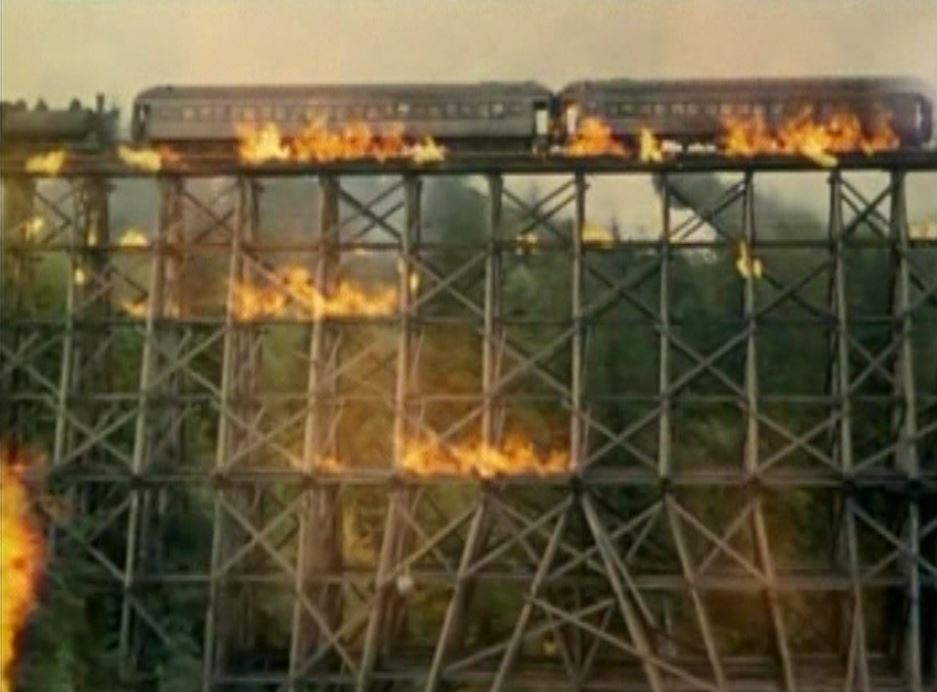
Image result for Boring trestle bridge fire
Screenshot of "Ring of Fire" used for dramatic purposes
illustrating the Boring (yawn) trestle fire
(MGM Studios)
WWII did not bring a resurgence in business like it did with the other big electric roads in California; instead, a new highway out to the Boring logging companies (yawn) were made instead of rebuilding the burned trestle bridge. Today, out to Estacada, an abnormally large highway still exists that goes straight to nowhere. The bridge remains have since vanished in time.

After 1946, the company was sold to a California-based holding company called Portland Transit Co. Portland Traction would continue operation of the city-based streetcars while Portland GE would be spun off, seperate from the railroads. No efforts were made by Portland Transit to continue expansion, as they were more interested in selling redundant or unprofitable lines for the quickest buck possible.

Image result for Hawthorne Bridge Portland 1950s
Portland's Hawthorne Bridge ramp, westbound, 1957
(Vintage Portland)
The Hawthorne Bridge's rebuilding proved to be the final nail, as no electric cars roamed west of the Willamette River due to the existing street rails being removed in the process. Diesels would take over from Portland Traction's freight division and the final electric operations (passenger and freight)  occured in 1958, bringing the PEPCO to a close.

PEPCO continued to be seen on local area timetables between the Union Pacific and Southern Pacific Railroads, who acquired what remained as a joint ownership in 1962. The outer lines would be closed off in the 1970s and 1980s as business dried up, with the Gresham line sold to Portland Trimet for the current MAX line.

Image result for Portland MAX Gresham
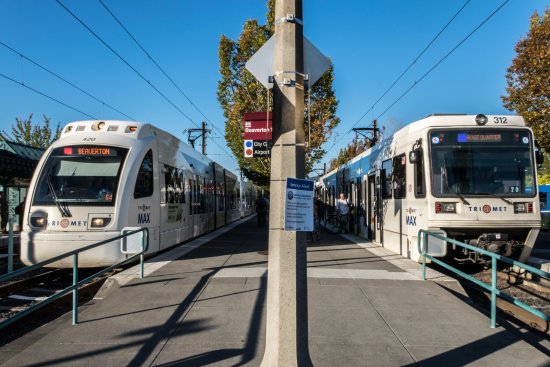
Portland MAX Train bound for Gresham via Blue Line, crossing the Steel Bridge
(Trimet News)

The final remains of the PEPCO is a 6.5 stub between East Portland and Milwaukie purchased by Mr. Richard Samuels in 1987. He initially called his shortline operation the East Portland Traction Company in tribute, but it is now better known as the Oregon Pacific. He also purchased and restored Portland Traction No. 100, an EMD SW-1 which originally took over the electric freight engines in 1952. Today, the OPRR runs PT No. 100 on the ORHF's weekend trains out to Oaks Park and the 6.5 mile line continues to see business from local suppliers and sawmills.

Image result for Portland Traction 100
Portland Traction 100 on the OPRR's Oaks Park Line
(Oregon Pacific Railroad)
Image result for Oregon Pacific Richard Samuels
Richard Samuels with OPRR 1415 at the ORHF's yards
(Portland Tribune)
-----

Thank you for reading today, and join us on Thursday when we look at the many cartypes of the Portland Traction! You might even see some familiar faces along the way. Until then, ride safe and keep your pole on the wire!

Thursday, January 9, 2020

Trolley Thursday 1/9/20: Oregon Electric Railway


Welcome to the brand-new Trolley Thursday format! Please don't track your muddy feet in my car. Before we start, hope you enjoy this brand-new format and I'll see you after the- BRAKE!

-----

Credit: PDXhistory.com
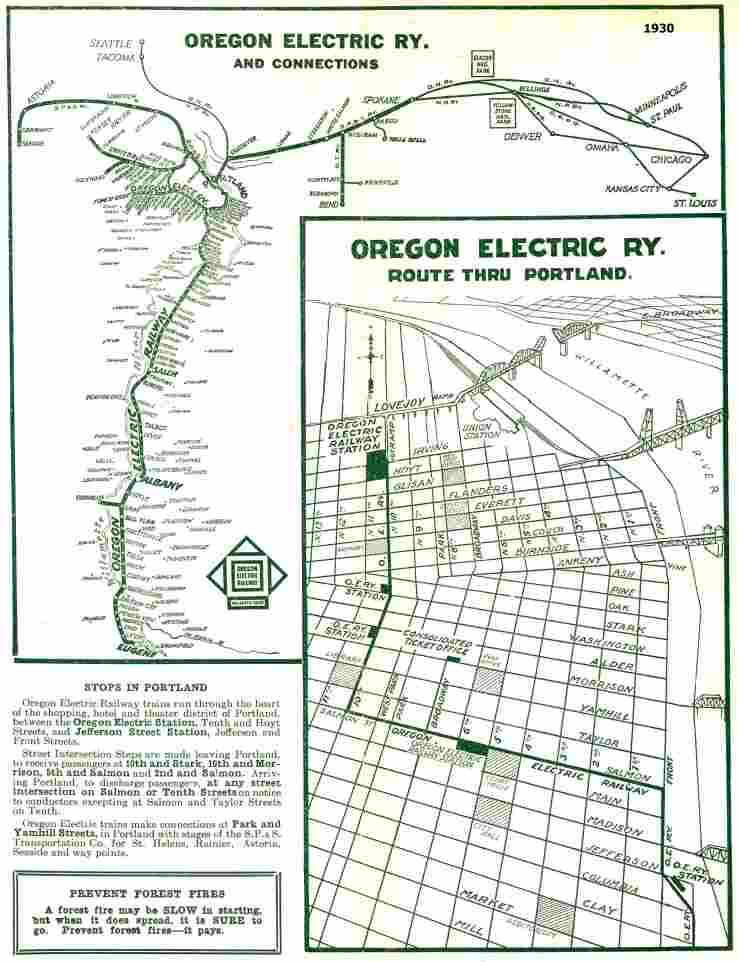
Oregon’s own home-grown interurban line, the Oregon Electric, began life as the Willamette Valley Traction Co. in 1905 running between Portland and Salem (47 miles). At this time, the only other interurban line would be the Portland Traction (then, the East Side Railway) What made the WVTC stand out from the ESR/PT/PEPCO (It’s very confusing, but more on this later) was that WVTC situated itself on the east side of the Willamette, able to access the growing suburbs to connect with the major downtown areas on the west side of the river.


On January 1, 1908 (112 years this year, actually), the WVTC officially opened its Portland-Salem mainline and later renamed itself to the “Oregon Electric” that same year. Great Northern would purchase the interurban company. The Spokane, Portland and Seattle (SP&S), an interchange road between parents GN and NP, would be selected to run the railway operations. James J. Hill, who wholly owned the SP&S, intended for the interurban to be a stopgap to keep E.H. Harriman’s UP & SP out of the territory.


Photo credit: PDXhistory.com
In the heated battle between the barons, the now-Oregon Electric (OE) acquired the United Railways west of Portland (no relation to the SF one) and extended out to Albany and Eugene in 1912, then Corvallis and a freight branch east of Albany by 1913, collecting over 190 miles.

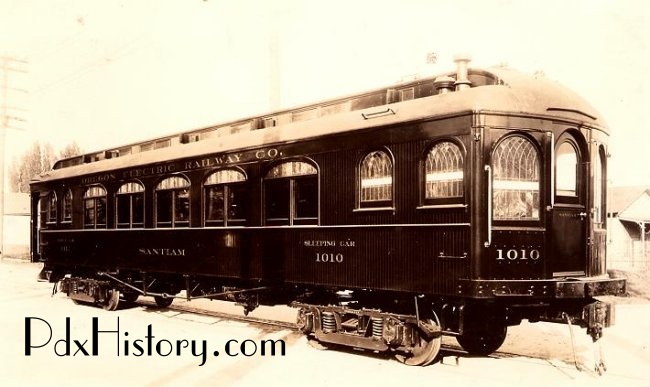
Passenger service on the OE was supplemented by lavish parlors and observation cars, much like the Sacramento Northern to the south, built by the Niles Car Company. As luxurious as they were, they were also quite slow with normal service speed being 45mph.

However, speed was not so important to the OE, compared to the hustle of the SP’s Red Electrics with their faster schedules. Luxury was the name of the game, and at one point, OE even boasted a sleeper car alongside their parlor observations. There's no doubt that it was a haven for weary commuters heading back home.


Photo credit: Well... it's right there.


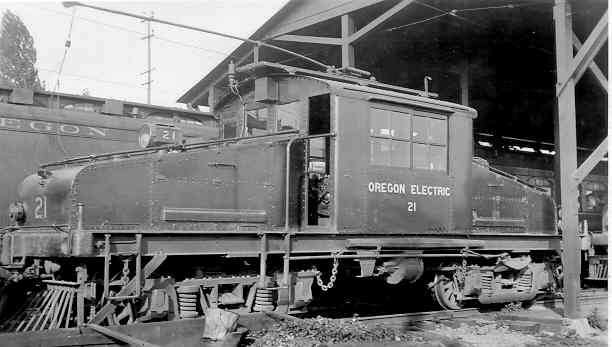
The run between Portland and Eugene would take about 4 hours one-way, but passengers were of little importance (and brought little profit) to the OE as the main money came from freight operations (like the Albany  extension), and this brought along some handsome electric locomotives.


Photo credit: Oregon Electric Railway Museum

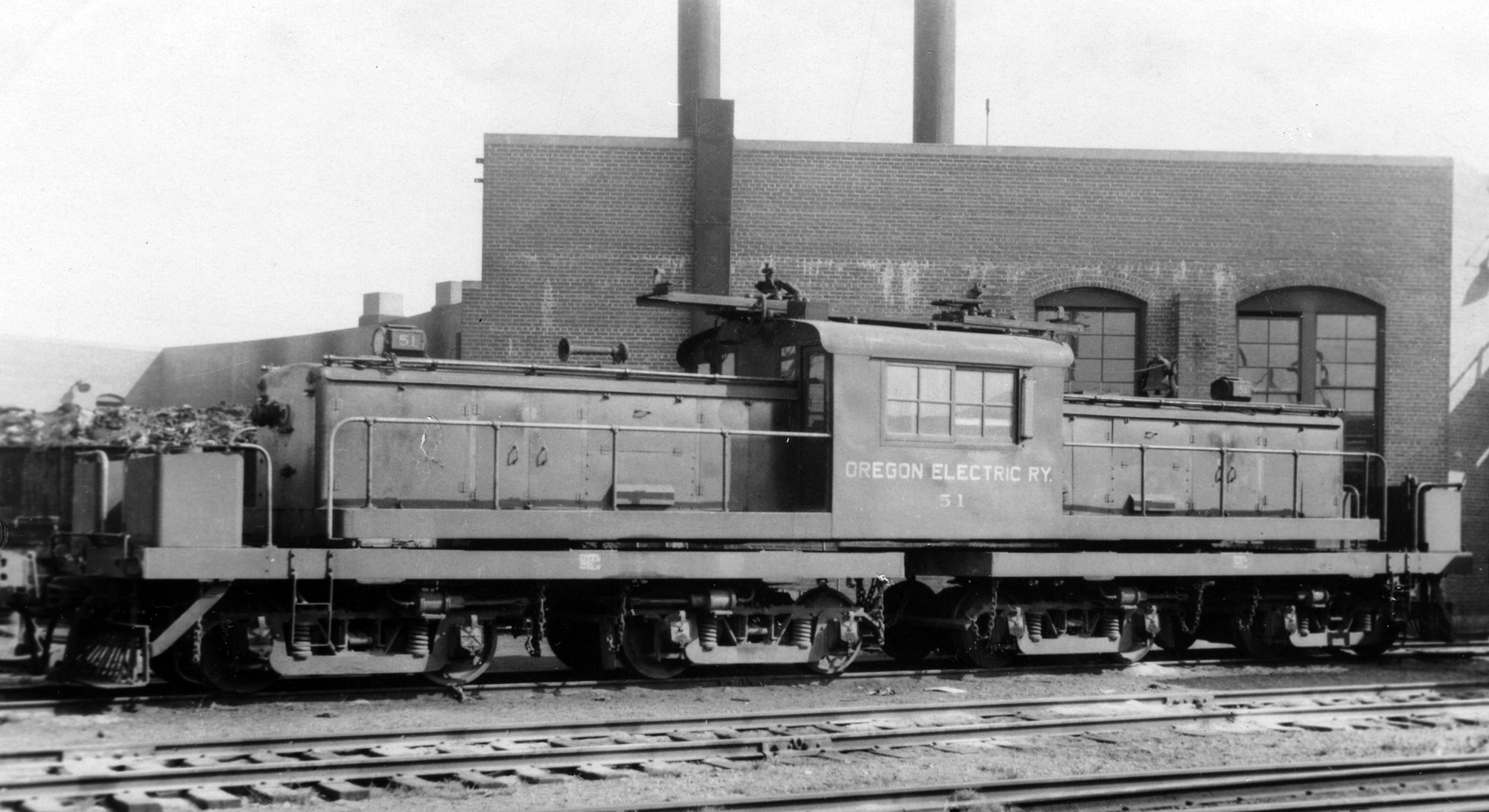
The first freight motors constructed for the OE were Alco-GE steeplecabs delivered in 1912. These would eventually mostly be sold to the British Columbia Electric Railway in the mid 1940s. Replacing the smaller steeple cabs would be five massive articulated steeple and boxcabs outshopped from SP&S' own works, considered some of the biggest electric freight engines on the west coast. With a B-B-B-B wheel arrangement set up like two flatcars supporting a longer flatcar, they could contend with any tight curves.

Image result for oregon Electric railway freight locomotive
Photo credit: AmericanRails.com

But much like its rivals in the Red Electric, elaborate freight locomotives and slow passenger services could not stem the wheels of progress. Even with profitable freight operations, the company saw no adequate profit to maintain its interurban service, accruing an annual debt of $500,000, and would soon close much of its outlying trackage. The Corvallis Branch was abandoned in 1931, followed by the Woodburn line, and then all passenger services in 1933, with all electric operations in 1945. Freight service through downtown Portland was also cut, with whatever remained being used as SP&S’ freight connections.

Image result for oregon Electric railway freight locomotive
Photo credit: Amos Anonymous
Two of the SP&S’ giant electrics were sold to Chicago, North Shore & Milwaukee (The North Shore) in 1947, with the other three to the Fort Dodge, Des Moines and Southern. The Fort Dodge engines would be scrapped in 1957, with the North Shore's following sometime after.

The Oregon Electric continued to operate as a dieselised road until December 31, 1994, when inheritor Burlington Northern ran one last freight train on the Portland-Beaverton route. Ownership was then passed to a joint ownership of BNSF, the state of Oregon, and Portland & Western.

The SP&S briefly returned to the former Oregon Electric in mid-1999, when Northern No. 700 ran a series of excursions in conjunction with the P&W on the Portland-Beaverton route. Since then, it has remained a freight shortline interchanging with the BNSF.

Image result for SP&S 700 beaverton
Photo credit: Robert D. West

Another return on the OE was passenger service on the Tigard-Wilsonville line, which is now part of Portland Trimet’s Westwide Express Service (WES) diesel interurban line (featuring ex-Alaska/New Haven and Via Rail RDCs in occasional service). The OE branch between Hillsboro and Beaverton is also now part of the TriMet's MAX Blue Line, bringing another return of interurban light rail.

Image result for Trimet Wilsonville RDC
Photo credit: Dan Haneckow 
Image result for Portland MAX Beaverton
Photo credit: TripAdvisor

Related image
Photo credit: Another Believer
Concerning infratructure, the stations in Eugene and Albany have found new leases on life as popular restaurants, while the site of the Multnomah depot is now a supermarket parking lot. Even into the modern day, city workers in Eugene have been uncovering the old tracks following Fifth Avenue, two blocks from what is now the Oregon Electric Station restaurant. Even with the rolling of history, you can’t keep a good electric railway down!


-----


Join us next Tuesday, when we finally take a look at the tiny little cars of the Portland Traction Company, and even see some familiar faces along the way! Thanks for reading and ride safe!

(Also forgive the slight formatting mistakes, this is the only post that'll have these Twitter-format issues)

Wednesday, January 8, 2020

Welcome Aboard!

To all to come to this happy place, welcome.

It's come to my attention that my trolleypostings are getting a bit... big for Twitter. Sure, they've gotten plenty of attention and reblogging and readings and love, but considering I want to be very comprehensive with the history I can uncover and relate, I feel it's time I expanded it even more.

So, I want to announce that Trolley Tuesdays and Thursdays are moving to Blogger, with the intro-posts still remaining on Twitter for you to share! Old episodes from 2019 will also be uploaded here titled "From the Archives" starting in February, and will be handily organized into different tags so you can peruse the archives, but the content will remain the same! As for this month, the shift will be happening next Tuesday so this upcoming episode (Thursday) will be the last on Twitter.

I hope this is a lot easier going forward, and I want to thank you all again for your loyal readership. 
-Your Motorman