Showing posts with label Wyoming Streetcars. Show all posts

Tuesday, March 24, 2020

Trolley Tuesday 3/24/19 - The Sheridan Streetcar

Our third and final Wyoming trolley adventure in March (because we couldn't fill it with enough content about Arizona) comes from the northern edge of the big square state! Sheridan, Wyoming, is certainly more remote than Laramie or Cheyenne, but it is nonetheless as important as the two when it comes to trolley history: not only did Sheridan have the only interurban line in the state, but it is also home to the only remaining streetcar in all of Wyoming. All of these and more on today's Trolley Tuesday!

-----

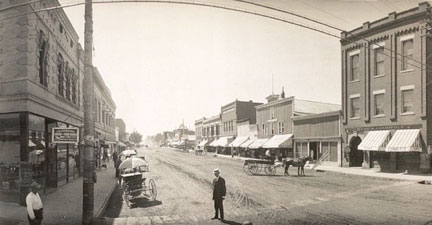
Sheridan’s Main Street in 1909, before the streetcar line, looking south.
Sheridan in 1909, prior to the streetcar installation.
(Wyohistory.org)

Sheridan, WY, lies 13 miles south of the Wyoming-Montana border within the same-named county. The town site was first inhabited in 1878 by trapped George Mantel, but the town would be officially established in 1882 and named after Civil War General Philip Sheridan of the Union Army. In the early days, railroad commerce fueled the small town thanks to the Burlington & Missouri Railroad (B&M, now Burlington Northern Santa Fe), but it was the discovery of rich coal mines that boosted Sheridan's status as a mining boomtown. By 1910, where this story begins, Sheridan boasted 18,000 citizens, but no train service to and from the mines. 

Burlington and Missouri Railroad No. 120 in Broken Bow, Nebraska, 1886.
(Library of Congress)
In 1910, two men from Dayton, Ohio named Albert Emanuel and William Sullivan, proposed giving Sheridan its own streetcar system that would also provide interurban service from the town to the mines, the only one in the state. Unlike the hornswoggling committed in Laramie, the city fathers trusted Emanuel and Sullivan enough to approve their proposal and contruction began on July, 11, 1910, finishing just a year and a month later on August 11 with a single line down Main Street from the Burlington & Missouri depot. 
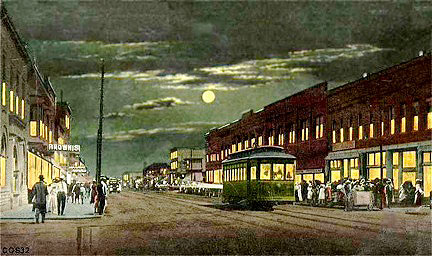
Sheridan at night, in a colorized daytime image with a false moonlit sky, featuring the Sheridan Railway Company streetcar.
A colorised image of Sheridan at night, with a tiny "Rubber Stamp" heading away.
(Wyohistory.org)
The new company, the Sheridan Railway & Light Company, was a welcome modernization to the town and on opening day, many crowded the streets to gaze at the new trolley cars. Three would be delivered that opening day from American Car Co. and came to be known as "rubber stamps" due to the short shape resembling a traditional stamp applicator. Car 10 would be draped in a fashionable banner reading "The Buisness Mens Club" as she rolled down Main Street, but nobody would bother to correct the spelling or grammar errors.

Guys, this is literally what my editor is here for.
(Downtown Sheridan)

The Main Street alignment would be known as the City Line, and after a successful operating period of five days, a second line would open dubbed the "Fort Line." This extension ran up Main Street and over Lewis Hill to the Sheridan County Fairgrounds, before heading out to Fort MacKenzie, a US Army outpost established in 1898. With two trolley lines operating at peak capacity over five streetcars, it was now time for an interurban line.

Sheridan's swanky interurban cars by American Car Co. of St. Louis, photographed October 1911
(Bill Volkmer)
Dietz was located five miles north of Sheridan, with the line north following the B&M's mainline out to Montana. The mine entrance was too far for the railroad to change its alignment, so the interurban was built to haul workers to and from the mines much more conveniently. The route would add another 12 miles to the Sheridan system and large wooden interurbans from American Car to the boomtown's fleet.
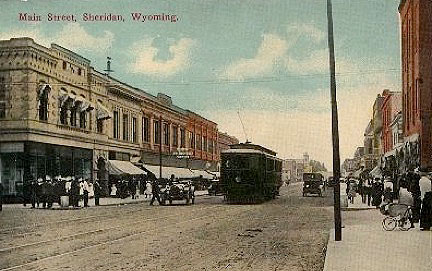
Sheridan in 1912, showing an electric trolley car that serviced the mining towns of Monarch and Acme, looking north.
Another postcard shot of 1912, showing the Mine Interurban on Main Street, looking North.
(Wyohistory)
The line operated as a source of civic pride the rest of the 1910s with no major changes, just another small town streetcar, but the 1920s brought about major change. It wasn't the bus companies that killed the Sheridan streetcar, but rather a matter of practicality. Main Street was to be repaved in 1923, and the city council added that the double-track down Main would be removed due to declining ridership. In September 1923, the City Line was discontinued but that left the Fort street and Mine interurban lines operating.

Image result for Sheridan Wyoming 1920s
A Main Street Postcard of Sheridan in the late 1920s, showing a distinct lack of trolley track or wire.
(HipPostcard)
March 1924 would see the Fort Line give up the ghost when it was replaced by bus service, and the Mine interurban would be abandoned in 1926, giving it the distinction of being the last electric railway in the state of Wyoming. Though Sheridan continues today as a quiet little mountain town full of buses, the Sheridan Electric Lives on when the body of city car 115 (itself an original American Car Co. product) was found lying in a field. Today, the Sheridan County Museum has the car plinthed outside their location where it was first restored in 1976.

Image result for Sheridan Wyoming trolley
Sheridan Electric and Light Co. No. 115, the last trolleycar in Wyoming.
(The Sheridan Press)
Car 115 underwent a quick restoration for America's bicentennial, including slipping two AAR freight trucks below its original steel frame. Today, the Sheridan College Welding Department and the Sheridan County Museum are working to make a new steel base to sit the original body on (complete with facsimile wheels) and give the 115 a new lease on life. 

-----

Thank you for reading today's Trolley Tuesday postings! As a minor surprise, this is the last episode in March as we've... run out of content, so Thursday will be have no postings. Fret not, however! Starting March 31, we move over to our next state: Colorado! You won't believe how much trolley content we get to mine from there! Until next time, follow myself and my editor on Twitter, go buy a shirt, and ride safe! 

Thursday, March 19, 2020

Trolley Thursday 3/18/20 - Cheyenne Electric Railway Co.

Welcome back to Trolley Thursday, where today we'll be looking at the capital city of Cheyenne, Wyoming. The city needs no introduction to railfans as it's famous for housing the Union Pacific railyard and maintenance facility that houses steam locomotives 844, 3985, 4014, and 5511, as well as a sprawling diesel complex. While UP had a hand in establishing the railroad boomtown during the race west to complete the Transcontinental Railroad, one small railroad thing they had no involvement in was the Cheyenne Electric Railway Co, or CERCo. Never heard of it? Well neither did I until this morning, but here's a basic rundown after the break.

-----

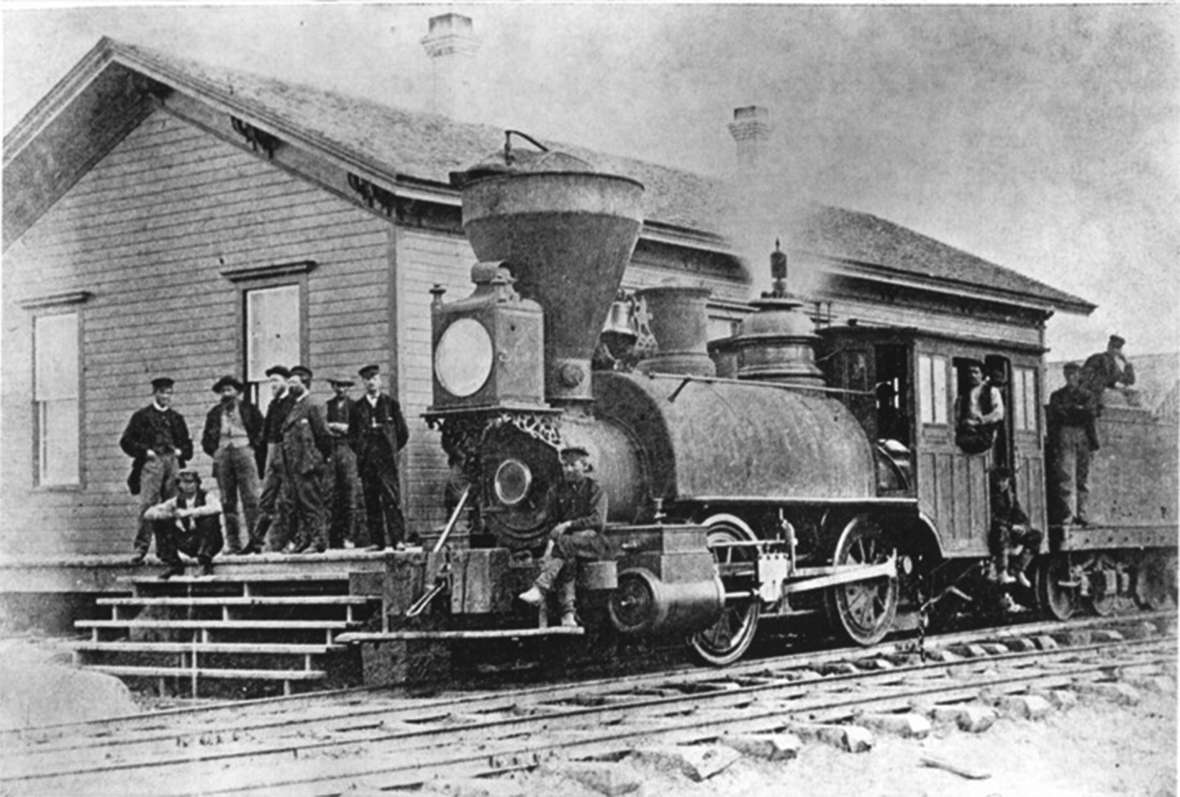
The first Union Pacific engine in Cheyenne, 1867.
(WyoHistory.org)
Cheyenne was first established by the Union Pacific's surveying team on July 4, 1867 while on its Hell-on-Wheels bender towards Promontory Summit, with General Grenville M. Dodge receiving credit and naming the town after the local Cheyenne tribe. The UP would cross the Crow Creek, a tributary of the North Platte River, here and the town would be joined by Fort D.A. Russell three miles west. In November 1867, the UP's construction team would finally reach Cheyenne and skyrocket the population to well over 4,000, earning its nickname, "The Magic City of the Plains."

Image result for Cheyenne 1867
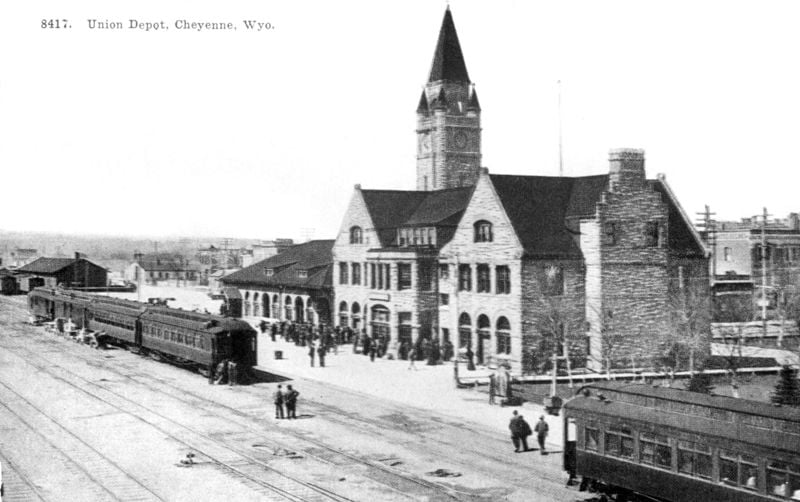
Cheyenne's Union Pacific depot, 1909
(Wyoming Tribune Eagle)
By 1887, Cheyenne's Union Pacific Depot was built opposite the Wyoming State Capitol and it brought both city pride and movement to its citizens, which meant it was high time for a streetcar system. It is here that literature on when the establishment of the Cheyenne Street Railway (CSR) and which companies comprised it differ. What can be agreed on is that the CSR was first organized in 1886, before Wyoming's statehood, and by 1887 it had merged with another company and received its permit to lay track.

Usually, many cities would be excited at the prospect of a new trolley system, but not Cheyenne: citizens living along 17th St. raised complaints that trolley bells would cause too much noise pollution. Mayor Charles Riner decided to ignore these complaints, as one does. June 1887 saw the final routing plans of the CSR going from the UP depot, head north to the Cheyenne Fairgrounds via 16th, Eddy (now Pioneer), 22nd, O'Neil, 25th, Dillon Ave, and 27th St.

Image result for Cheyenne 1889 Wyoming city
Cheyenne in 1889, one of the rare shots of the Red Line
horsecar heading fo the Fairgrounds
(C.D. Kirkland)
The next month, three brand new horse-cars would emerge from the Cheyenne Carriage Company. The contract originally called for four cars, with more from outside manufacturers. Unfortunately, several of the contracted companies had undergone massive fire damages, so when the system opened in January 1888, there was only one car for each of the three lines: Red Line to the fairgrounds, Yellow to Russell Ave, and Green from the Capitol to the Cemetary. By contemporary newspaper accounts, the horsecars were "very well built".

Ridership declined early for the horse-car line, and it quietly closed in August 4, 1892 after being deemed "unprofitable." After a gap of 14 years, the Cheyenne Electric Railway Company (CERCo.) was established by Thomas Cosgrove, president of the First National Bank of Cheyenne. With additional capital from prominent businessmen Francis E. Warren and Joseph M. Carey ($5000 each, which in 2019 dollars is $144,075), the new electric railway could now reach Fort D.A. Russell from 15th Street and Capitol Avenue in just 5.24 miles of track (the .24 being the carhouse at Cribbon Avenue). A nickel could get you anywhere in the city, but heading out to the Fort cost you a dime, and if you were under six, you could ride free with an adult.

Image result for Cheyenne horsecar
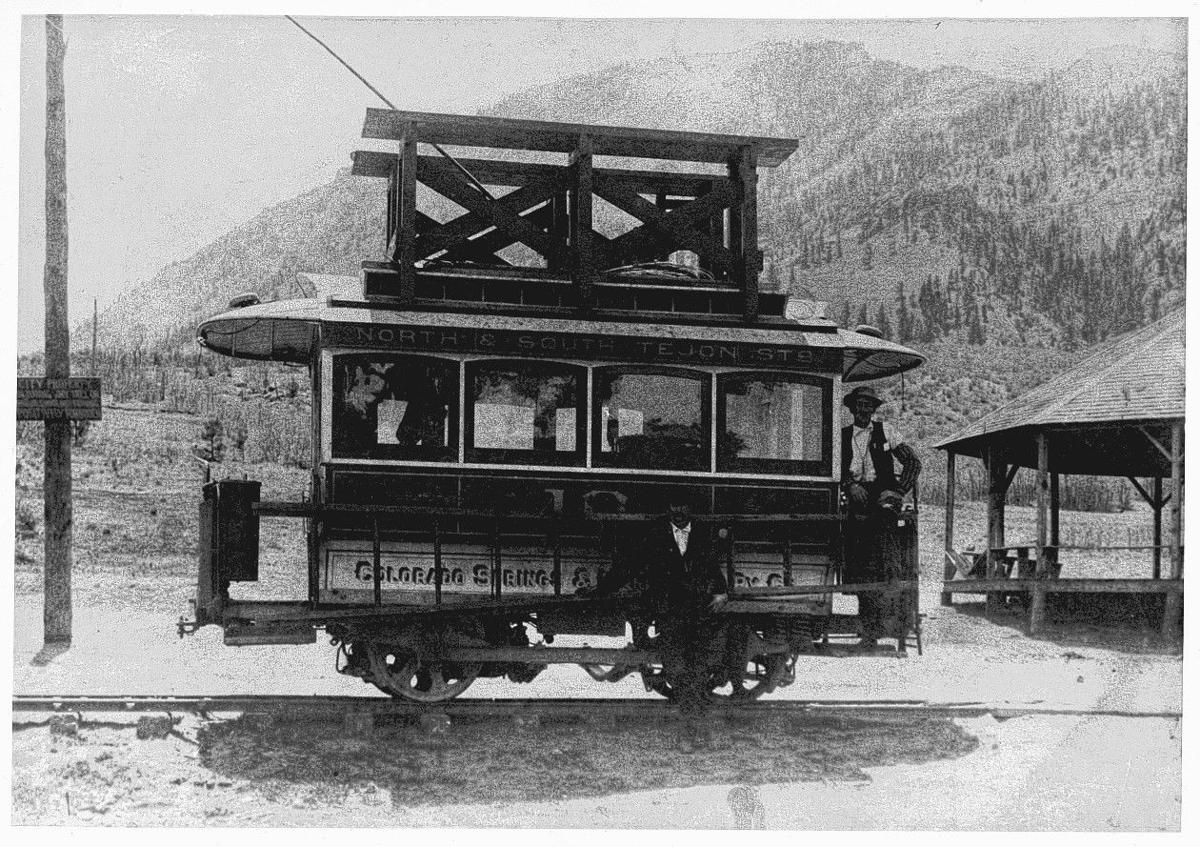
A Colorado Springs & Manitou Railway electrified horsecar,
probably similar to what ran on the CERCo.
(Pikes Peak Newspapers)
From here, operational information on the CERCo. is slim, but in the period of electric railway oprations, the company appealed to the Wyoming Judge Advocate General in 1918 asking for a decrease in fares for both enlisted and civilian personnel around Fort D.A. Russell (reduced to 7 cents). The JAG agreed to honor the contract modification as it would "eliminate much inconvenience and cause no appreciable hardship," on the condition that ticket offices be established at each end of the line to enforce this new fare.

A postcar view of a CERCo Birney car with the Union Pacific depot in the background
(Don Ross)
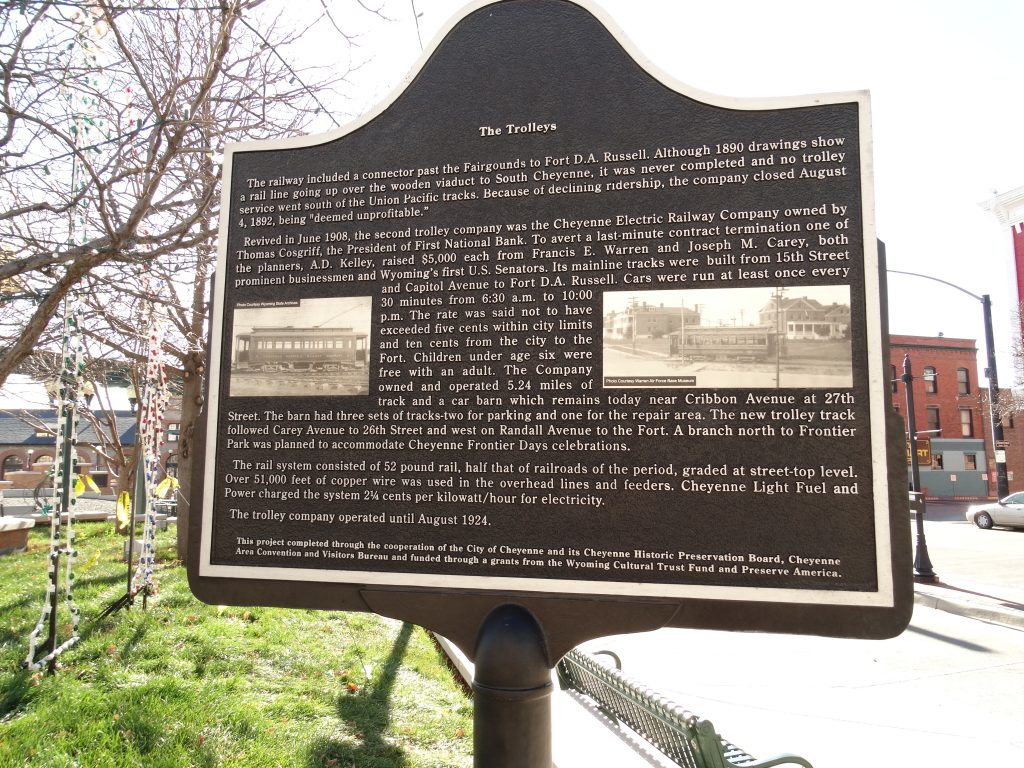
The rolling stock of the CERCo. comprised of antique Brill cars from the same era as the Portland Council Crests. After WWI, the CERCo. would purchase a new fleet of Birney cars to ply the streets in 1922. These cars were light enough to run on the system's 52 lb rail, which even for street track was absolutely light. The system would go on for two more years before it was purchased privately in 1924 and converted to buses. The Birneys would be sold off to various railways, including the Fort Collins Municipal Railway, and regrettably the only trolley that still runs in the Magic City of the Plains is a tourist trolley bus. All that remains of the CERCo. is the original carbarn and an informative plaque.

The CERCo's headstone, for all intents and purposes, showing two of the Brill cars.
(Wyoming in Motion)
-----

So that is the very very brief and often patchy history of the Cheyenne Electric Railway Co. If anyone does have anymore information about this boonie Birney system, please hit me up on my twitter account or get in touch with my Wyoming-based editor on his. You can also financially help us by buying a shirt (new designs incoming). Next week, we look at the Sheridan Interurban, but until then, ride safe and stay healthy! 

Tuesday, March 17, 2020

Trolley Tuesday 3/17/20 - The Laramie Horsecar

Welcome back to a carhouse-quarantined Trolley Tuesday, which is still right on schedule, where today my editor Nakkune and I will be taking you through the state of Wyoming's public transit operations in a bit to fill up the remaining month since we've just about exhausted everything Arizona had to offer. Now I know we have the whole pandemic going around, but rest assured: in times of quite possible one of the biggest and most mysterious pandemics in recent memory, the best thing we can all do right now is be healthy, be hygienic, and most of all be level-headed. That way, we can all ensure our loved ones and ourselves are safe from the virus. In the meantime, allow yourself to be distracted as we start our journey in the Cowboy State with the Gem of the Plains: Laramie!

(All info contained and retold in here originally appeared in the Laramie Boomerang by Judy Knight, all rights reserved, no plagiarism intentional.)

----

Image result for Laramie 1890s
Laramie, WY, circa 1888. Good doggy.
(Old Town Laramie)
In the 1890s, Laramie, WY was the epicenter of several regional railroads and industries serving not just cattle and meat packing, but also rolling mills, railroad tie treatment, breweries, glass manufacturing, and electric provisions. The University of Wyoming was also established not long before, with an agricultural college added by the turn of the decade. Laramie was also mighty progressive, as several women were able to cast votes and serve on juries long before the Seneca Falls Convention under the first Wyoming Territory legislature. To satisfy the growing modernism of what was once one of the most lawless towns in the territory, it was high time for that great tool of modernism to make its debut: the horsecar.

Image result for 1880s horsecar
A horsecar of the Market Street Railway, circa 1880s
(SFMSR Archives)
The first corporation to announce a proper street railway was organized in 1887 by James Vine, Hon. J.W. Blake, and then-mayor N.F. Spicer serving as the board of trustees. Unfortunately, this effort seemed to go nowhere and it wasn't until 1890 when the Laramie Improvement Company put advertisements in the Laramie Boomerang proclaiming new streetcars to their subdivisions in East Laramie in June 1890, emulating the popular streetcar suburban boom. Unfortunately, this went nowhere either and the town was itching for some decent public transit to make the town mobile. This is where Mr. Francis M. McHale enters the picture.


Image result for no picture found
An image of Francis M. McHale, if we could find one.
(Who knows?)
Not much is known about McHale's personal life, other than his birth in 1858 and various marriage certificates, birth certificates, and census data up to 1910. What is well known, however, is how this young gun showed up to Laramie in March 1891 and sent the entire town into a tizzy. At the time, McHale was a 33 year-old lawyer and officer employed under the Western Farm Mortgage Trust of Denver; he was also married with one daughter and another on the way, and was every bit the family man he displayed as himself. 

McHale first arrived in Laramie with the intention of buying oil property in Albany County (of which Laramie is the county seat). He also had an interest in building a “$50,000 hotel at the corner of Second and Garfield” (close to the Laramie Railroad Depot) but nobody would sell him the land or the buildings occupying that spot. It seemed by this point, his big mouth got ahead of him and McHale grandly proclaimed he was developing a railroad going from Albuquerque, New Mexico, to Pagosa Springs, Colorado, to increase lumber traffic through Laramie and promote the "healing nature of the Springs that 'could cure anything from hydrophobia to delirium tremens." Word of his grand promises reached the Laramie City Council and from there, McHale had them on a leash.


An early converted horsecar running on electric wires,
under the Milwaukee Electric and Light Co, 1890
(We Energies)

At the time, many contemporary street railways were switching to electrical power but electricity was hard to come by and expensive to install for many smaller towns, and Laramie was no exception. Despite the existence of an electrical plant in town, McHale drew up plans with local business owners August Trabing and James Vine to create a horse-drawn system using a corporation charter he gained from the state of Wyoming. McHale also stirred the local crowd, holding interviews and gaining support until  he city council voted unanimously to grant the overeager businessman an exclusive franchise as the "Laramie Tramway Company", or LaTCo. $100,000 of capital over various stocks and bonds were raised and many skeptical councilors were left shocked this got though.

McHale promised the city council that eight miles of horse-drawn track would help satisfy public movement, with the choice of animal power a consequence of a ban on steam-powered trains through neighborhoods. The city council found this agreement worthy to honor, and lightly warned McHale that if four miles were not laid by the same date, 1892, the franchise would be forfeited. This deal lasted until August of that year, when McHale returned to Laramie saying that his "Denver directors" had had an epiphany and desired an electric system instead. (Suspiciously, none of his cohorts nor any Laramie-based LaTCo officers were consulted.)

The "Huge Monster" of Laramie, where Union Pacific rail was rolled and ties were treated.
(Albany County Historical Society)
The Union Pacific was briefly swindled into the deal, as McHale wanted to purchase 24-lb rail from their Laramie rolling mill rather than the 16-lb rail commonly used by any normal horseline. All through the fall and winter, McHale and his friends continued to try to drum up financial support for the line while track construction languished. Suspiciously, what little construction the Boomerang could detail was documented 50 years later, wherein "one streetcar company was using cover of darkness to tear up track laid by a competing company."

A Western Farm Mortgage & Trust advertising
 flyer from Lawrence, Kansas, 1895.
(Unknown Author)
1892 brought with it a landslide of trouble, starting when McHale's employers, the Western Farm Mortgage Trust Co, was thrust into recievership due to a drop in wheat prices and ill-timed farm expansions that left many Colorado farmers unable to pay their mortgage, bankrupting the trust. The trouble continued that summer of June 1892, when all the Albany County properties McHale bought or traded for were put at auction by legal action from G.W. Griffith, one of McHale's former friends and a representative of LaTCo in the East.

Realizing they were all effed, and with the franchise about to expire, Griffith, Trabing and Thomas all pleaded the city council to extend the franchise and change the name to the "Laramie Electric Tramway and Light Company." (along with wanting exclusive rights to mount electric lights in Laramie) The trio did this to at least save the money they had invested into McHale's grandiose scheme. The city council took pity and granted the amended franchise, with the Boomerang suspiciously reporting, "Mr. F.M. McHale, originally president of the company is now not connected and is living in Kansas." This was the last time any talk of a trolley appeared in Laramie, which continued into the 20th Century without a single mile of track ever laid.

Image result for Cheyenne Wyoming street railway
The much more developed Cheyenne Electric Railway, just before 1917
(Ranch Wife)
So what happened next? Both August Trabing and James Vine, original investors in LaTCo, ended up becoming mayors of Laramie later on, while both the Colorado farmers and Eastern investors who funneled their money into McHale's schemes all lost their entire investments through the failure of Western Farm. As for McHale, he and his family was found to be living in Hoisington, Kansas in 1895, then moved to Lawrence, Kansas, by 1900. By 1910, the trail went cold as census records revealed McHale was living in Knoxville, Tennessee. Thus ends the odd, swindling saga of Mr. McHale's horsecar scheme.

Image result for Laramie M-10004
Laramie continues to be a vital outpost of the Union Pacific, with the town
taking care of the old railroad depot and adjoining park.
(Dieselpunks)
-----

Thank you for reading today's hard swerve Trolley Tuesday. As always, you can find mine and my editor's Twitters in the links provided, you can also help support the history posts by buying a shirt. Despite the way we all have to isolate ourselves for the forseeable future, it is our hope your interest and attention are positively affected by our posts. Ride safe, ride healthy, and we'll see you on Thursday.