Showing posts with label Arizona Streetcars. Show all posts

Thursday, March 12, 2020

Trolley Thursday 3/12/20 - Valley Metro Rail

A phoenix is a legendary bird that is said to expend itself by flashing into flames upon its death, then remake itself from its own ashes, ensuring that the bird is immortal and is a symbol for renewal and longevity. The city of Phoenix is much the same, as the original Phoenix Street Railway (PSR) was seriously affected by a large fire in 1947 and abandoned the year after, but in its ashes rose the Valley Metro Rail in 2008. On today's Trolley Thursday, we look at how the Valley Metro was able to spread its wings, and the struggles it has had in its current 12 years of operation.

-----

A 1999 Valley Metro Bus wearing the 1993-2006 paint scheme.
(Msr69er)
The current Valley Metro Rail began with the "Transit 2000 Regional Plan", or "Transit 2000", introduced in... the year 2000. Through a .5% sales tax, Phoenix voters aimed to improved the bus service and create a light rail service for better transportation at an affordable budget. The plan wasn't new, having been first proposed in 1989 as the "ValTrans" elevated rail system, but it was turned down by voters due to "cost and feasibility concerns." The initial plan called for $1.4 billion across twenty miles in construction costs, with a further $184 million in operational costs once the system was running, but it showed promise.

Image result for Phoenix Valley Metro Rail map original
Valley Metro Rail's original route, prior to extensions.
(The Transport Politic)
Phoenix, Tempe, and Mesa were to be connected by the new technically-interurban light rail line, which closely followed an original PSR plan drawn up to expand out to Mesa via Tempe in the early 1910s. Nothing came of this plan due to various reasons, but in 2005, ground was broken that would finally bring this early concept to life. The twenty mile stretch went from West Montebello Avenue in North Central Phoenix, then cut east at Washington and Jefferson Streets before winding into Tempe and ending at Sycamore in Mesa, with twenty eight stations in all designed to reflect their surroundings and blend in better. 

The trains would run similar to the Metro Blue and Gold Lines and other modern streetrunning installations: a raised "center reservation" down the middle of the street, with small private right-of-ways found at bridges. A minor hiccup occurred during construction when significant stretches of rail were found to have cracks due to improper plasma cutting with the fault landing square at the construction contractor's doorstep. The cracks were found in March of 2008, but repaired by May at a cost of $600,000 (not footed by the contractor). Despite this, the last of the concrete and rail were laid anyway in April and the first 50 light rail cars from Kinki Sharyo arrived for testing.

Image result for Phoenix Valley Metro Rail street
A Valley metro Kinki Sharyo LRV departs Smith-Martin/Apache, one of
many median stations on the line
(Steven Vance)
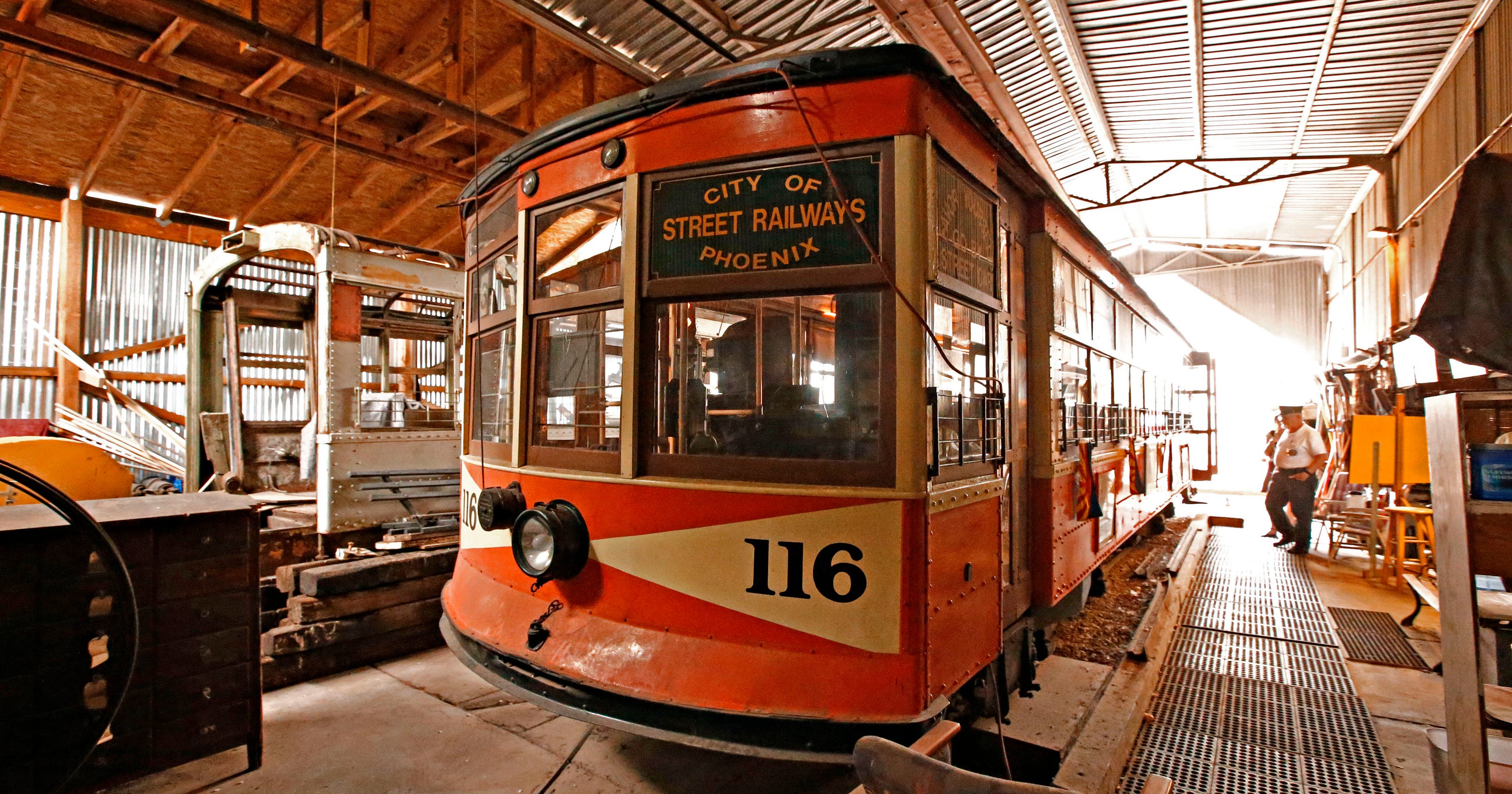
Image result for Phoenix Street Railway 116 2008
Phoenix Street Railway No. 116 sits on the sidelines during
the Valley Metro's opening festivities, having recently turned 80
(Ixnayonthetimmay)
The system would be rated at 750 volts on the overhead cantenary, and the maximum speed for the interurban would be 58 miles per hour. These cars would have to complete the 20 miles in just under an hour, which was pretty clippy timing given there were 28 individual stations. Just before the line's inauguration, the Valley Metro celebrated PSR 116's birthday, as she she had turned 80 on Christmas Day 2008 and the line's opening was planned for the next day.

The initial ridership proved a success, and it just kept rising and rising as the initial 44% farebox recovery was soon surpassed as the enormous ridership brought in plenty of revenue to offset the operation costs by $44 million by 2014. Urban development was also fostered in downtown Phoenix and Tempe, which gave the Valley Metro more incentive to grow. The first extension stretched into Central Mesa, costing $200 million over 3.1 miles and adding 5,000 daily riders to the fareboxes in its four new stations.


Image result for 4 lanes or no train
A local business, the El Fenix panderia, supporting
4 Lanes or No Train, in South Phoenix
(Associated Press
Regrettably, Phoenix's light rail was not without its enemies: enter grassroots group "4 Lane or No Train", which came into the public eye in 2018 opposing system expansions that would have met the city's planned expansion in 2034 to 66 miles total. Proposition 105 called for a rejection of a central reservation to be built on Central Avenue with six miles of the street being whittled to two-lane traffic. 4 Lane argued that this would "restrict business accessibility", which many small businesses in Phoenix gravitated towards. Further, the cost of the expansion was highlighted as a major threat, which is usually what ends up killing projects like this. (Light rail is a long term investment, after all) However, 4 Lane's "grassroots" efforts were actually being funded by two of the most infamous names in public transit since National City Lines: The Koch Brothers.

Image result for Charles and David Koch
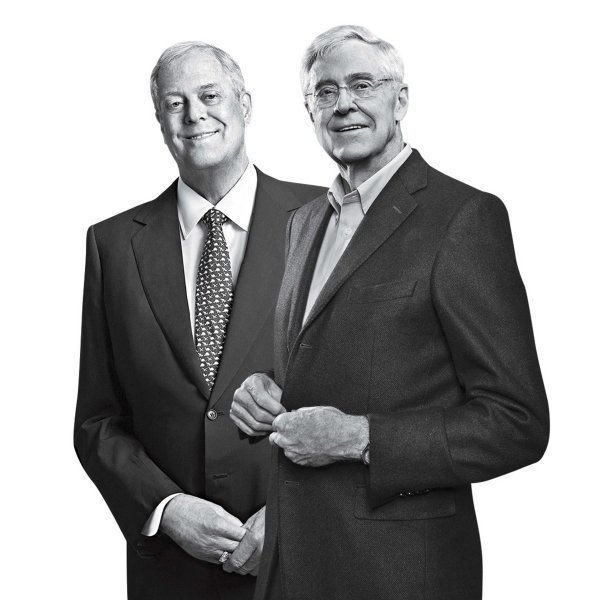
David (left) and Charles Koch (right), anti-rail billionaires
behind the new Streetcar Conspiracy. I made the picture
deliberately small.
(TIME Magazine)
The brothers need no introduction: Charles and David Koch are (and were, in David's case) a pair of libertarian-conservative brothers who got their money through oil, so like the Streetcar Conspiracy before them, they had a vested interest in promoting bus lines over light rail. In honing in on the increase of sales taxes for citizens and warning about the loss of possible business, the Kochs were able to stem light rail growth in Little Rock, southeast Michigan, central Utah, and Tennessee to name a few through various puppet "grassroots" groups and think tanks to drive home their agenda. Following David Koch's (the social one) death on August 23, 2019, Phoenix voters rejected Proposition 105 in a landslide 116,190 to 69,662 just four days later. 

Image result for Phoenix 50th street station
The first Valley Metro tain arrives at the new 50th Street
station, and it's not in service. Great.
(Gannett Fleming)
In the leadup to the landmark vote, new extensions at 50th Street's infill station and Gilbert Road in Mesa helped make the Phoenix system more robust. The Northwest Phase 1 (an original Transit 2000 plan now pushed back... let's say a lot) and South Central extension from the downtown Phoenix hub both started construction in late 2019, with the Northwest Phase 1 (reaching north into the city) expecting to open by... 2023 (we hope). Future extensions include the Tempe streetcar in 2021, the Northwest Phase II (reaching the western parts of Phoenix) by 2023, and the Capitol/I-10 West extension in two phases (2023, 2030). ASU West, Tempe, Mesa, and Chandler are all being researched for possible extensions, proving the system has the capabilities to keep on expanding.

In the meantime, ridership and travel times remain relatively reasonable, with the entire route taking 83 minutes from Phoenix to Mesa. The system also boasts one of the highest ridership compliances in the country, at 94%, with no foreseeable decline in ridership right now. Though the system remains a single line (much smaller than the PSR), it has certainly proved itself healthier and hardier than its predecessor, with the hopes it continues to be one of the best streetcars in America and a source of growth for Phoenix, Tempe, Mesa, and its surrounding neighborhoods.

Image result for phoenix valley metro light rail map 2019
A recent study map from early 2019 showing the planned expansions of
the Valley Metro Rail.
(Downtown Mesa!)
-----

Well, dear reader, I'm in a bit of a panic as is my editor. Unfortunately, Arizona doesn't have any other significant light rail or trolley systems to talk about beyond Phoenix and Tucson. However, fret not! As I write this by the seat of my pants, this month is also going to look at another state barren of its streetcars: Nakkune's home state of Wyoming! I'm sure we can find some way to fill time while this month is still young. In the meantime, follow our social medias, go buy a shirt if you want, and ride safe out there! 

Tuesday, March 10, 2020

Trolley Tuesday 3/10/20 - Phoenix Street Railway

If you come to Los Angeles, you'll find the San Fernando valley is littered with references to a man named Sherman: West Hollywood's former town name was Sherman, the former Pacific Electric San Fernando line terminated at Sherman Oaks, and the current LA Metro Orange Line bus goes from Canoga Park to North Hollywood via Sherman Way. Who was this Sherman, and how did he affect not only Los Angeles, but Phoenix, Arizona, in the late 1800s? Find out about this, and more on Phoenix's very own streetcars, in today's Trolley Tuesday.

-----

Image result for Moses Sherman
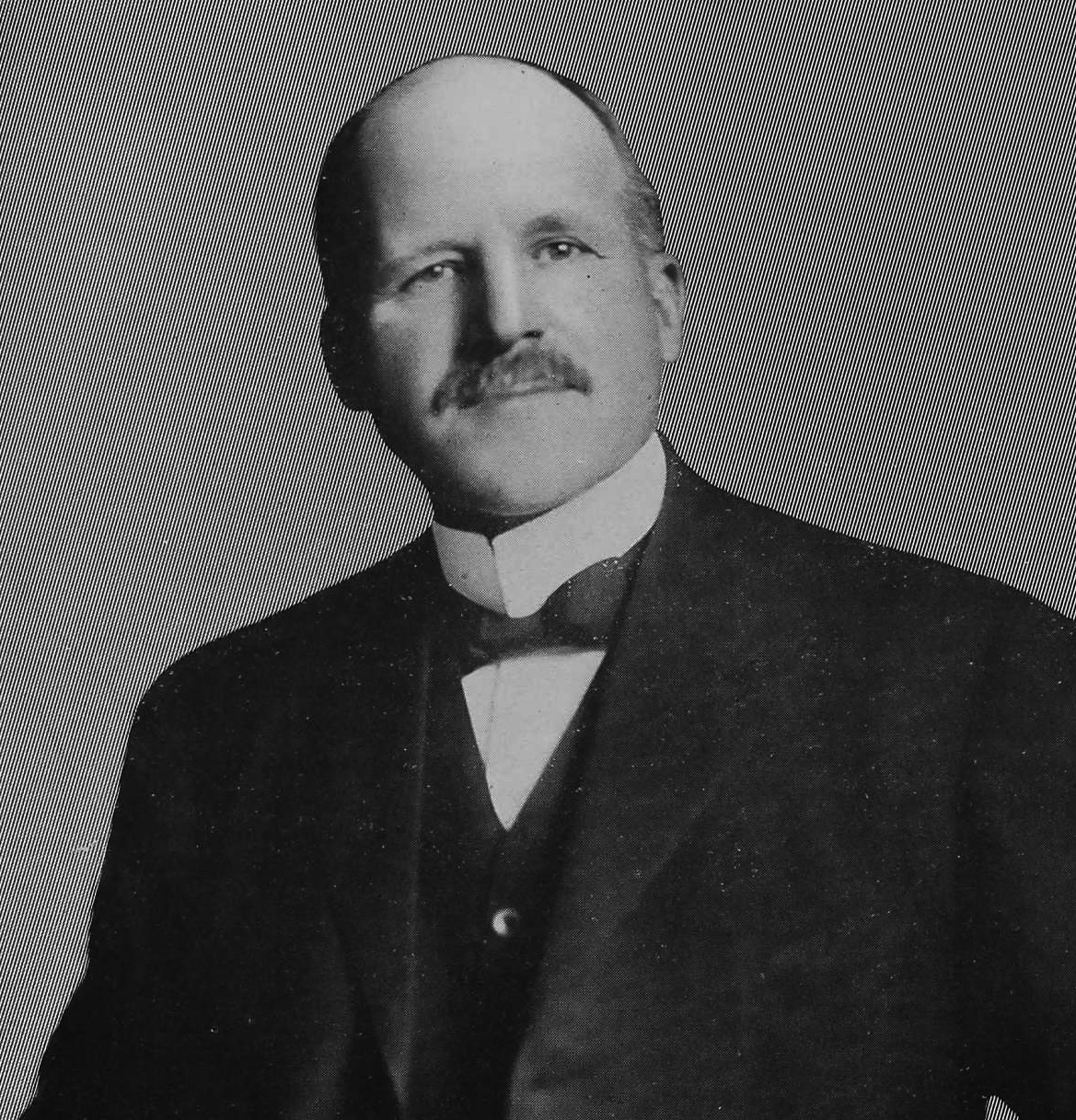
Moses Sherman, 1853-1932
Moses Hazeltine Sherman was born on December 3rd, 1853 in Rupert, Vermont. His original goal was to be a teacher, but after obtaining his teaching certificate from the Oswego Normal School in New York, he cut his career short and moved to Prescott, Arizona. To finance his teaching career, he began brokering mines and ranches under the interested eye of Governor John C. Fremont. In no time at all, Sherman was appointed the State Superintendant of Public Instruction with the title of Adjutant-General of the Territory, serving two terms. Sherman would continue to use his "General" title after he stopped teaching completely, instead opting to go into the money business by founding the Valley Bank of Phoenix in 1884.

Image result for Phoenix, 1880s
Phoenix's Salt River Valley, circa 1890
(HeritageAuctions.com)
Spending time in the state capital helped Sherman grow fond of the area, which at the time was barely being established and settled as a non-mining town. The Southern Pacific railroad was the first to reach Phoenix in 1879 to serve commercial needs driven by canal and agriculture. The Arizona Industrial Exposition was held for the first time in 1884 to foster good will and camraderie amongst inhabitants of the then-Arizona Territory, and continues up to today with the Arizona State Fair. Phoenix's capitol site was founded in 1889 when Moses Sherman, with associate M.E. Collins, donated 10 acres of land once the town was determined to be the new center of the territory.

Horsecars lined up outside the old County Courthouse, 1890s
(Rogue Columnist)
Two years prior to that, Sherman and Collins also established the original Phoenix Street Railway (PSR) in 1887 as (you guessed it) a real estate venture. As Phoenix was cut into various land subdivisions, Sherman determined the best way to promote landbuying was to give the citizens a way to move about. Electrification came quickly by 1893, and more than 3000 people welcomed the movement the trolleys provided.

Moses would not stay around to see the growth he planted, as he would move to Los Angeles in 1890 to establish the Los Angeles Consolidated Electric Railway with Eli P. Clark, his brother-in-law. This system would become the Los Angeles Pacific's "Balloon Route" between Venice/Santa Monica and Downtown LA via Hollywood and Venice Blvd. The system helped Los Angeles escaped its economic slump at the time, and would eventually merge with the Southern Pacific in 1906, with the system's owner, E.H. Harriman, earning a cool $6 million from Sherman. The General would retire shortly after in 1911.

Image result for Moses Sherman Balloon Route
Los Angeles & Pacific car "Hermosa" on an excursion on Sherman's Balloon Route
(KCET)
Image result for Phoenix Street Railway 1909
The street railway map by 1909, with connection to the
ATSF and Arizona Eastern
(Mike McDearmon)
Back in Phoenix, however, Sherman's trolley continued to grow. At the time of Sherman's retirement, the PSR had opened the first interurban line to Glendale, with others planned to reach Tempe, Mesa, and Scottsdale and also totally electrified the entire system by 1909. A competitor had also appeared, the Salt River Valley Electric Railway, by 1912. They quickly hired an army of engineers to build lines to Mesa via Tempe and Scottsdale, but it was found that by 1914, nothing was constructed save for some digging on Van Buren and Monroe Streets on the south side of town. The company was assumed abandoned by 1914.

The competitive period also brought a severe strike on the streetcars, with motormen and conductors up in arms against the management's laissez-faire upkeep of the system in 1913. With anti-union citizens boycotting the strike and the creation of the Salt River Electric Railway cutting into their profits, the PSR was in dire straits. Despite it all, the PSR continued to expand until it finally reached its maximum growth in the 1920s through several line extensions: 33.6 miles over six lines with powerlines delivering an interesting 550V-DC to its heritage fleet of wooden ex-horsecars and San Franciscan-patterened street and interurban cars.

Image result for Phoenix Street Railway
One of the PSR's early "California Car" type streetcars, 1920s
(Rogue Columnist)
By 1925, the public had had enough and urged the city council to buy the system as a means of improving it. Upon purchase, the city of Phoenix implemented increased arrival and departure frequencies and better maintenance to the relief of many, and brand new trolley cars just in time for Christmas, 1928. These cars, built by the American Car Company as "Double Birneys", remained the workhorses of the PSR fleet for the system's remaining years, where it was remembered fondly by locals along with the slogan, "Ride a Mile and Smile."

Double Birney 517 turns on the corner of Washington and 2nd, 1940
(Rogue Columnist)
Unlike many street railways, Phoenix's system did not simply die by bus; instead, it died by fire. On October 3, 1947, a massive fire swept through the city that also burned down a carhouse that contained almost the entire fleet of PSR's double Birneys. In February of next year, Phoenix officials declined rebuilding the streetcar service and abandoned service, switching transportation plans to center around bus service and automobile traffic.

Image result for Phoenix Street Railway fire
The final iteration of the Phoenix Street Railway lines at closure.
(Rogue Columnist)

The only remaining pieces of the PSR reside in the Phoenix Trolley Museum on 1117 Grand Avenue. Double Birney No. 116 was preserved following closure and restored to as-delivered condition as a static-display inside its small shed. Public transit in Phoenix is now served by the Valley Metro light rail system, which covers one of the planned interurban routes out to Tempe and Mesa, but more on that later...

Image result for Phoenix Street Railway museum
The Phoenix Trolley Museum's old location at Hence Park, with Birney 116
(John Samora, AZ Central)
-----

So that brings Phoenix's original trolley system to a close! If you want to support the Phoenix Trolley Museum, please visit their website or follow their social media wherever highlighted. And, as always, I sell tee-shirts if you want to see one of my drawings pasted across your torsos, and be sure to follow me and my editor on social medias if you want more content. Next week, we look at the modern Valley Metro and how it's doing. Until then, ride safe!


Thursday, March 5, 2020

Trolley Thursday 3/5/20 - The Old Pueblo Trolley

Tucson went without a streetcar service for over fifty years after the original company, Tucson Rapid Transit, went under in 1930. In that time, buses quickly took over as man are wont to do, but that didn't mean the trolley would be gone forever. A clever woman named Ruth Cross would be the catalyst for Tucson's trolley revolution, which began with a tiny trolley car from California.

-----

Image result for Arizona 1983
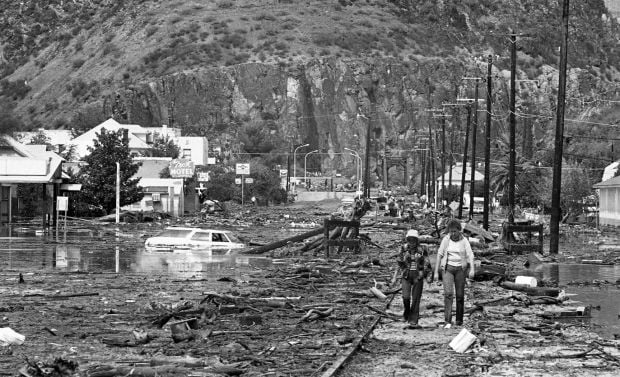
Two men inspect the damage left by tropical storm Octave, 1983
(Arizona Daily Star)
1983 brought several important events in Arizona history: The NCAA Fiesta Bowl between the ASU Sun Devils and University of Oklahoma Sooners saw ASU cruise to victory, the Phelps-Dodge Corporation feuded with copper miners and mill workers over layoffs and wage cuts due to a declining mining operation, and tropical storm Octave became the worst cyclone in state history with over $500 million in damages. But at the University of Arizona, something small but just as important was cooking.


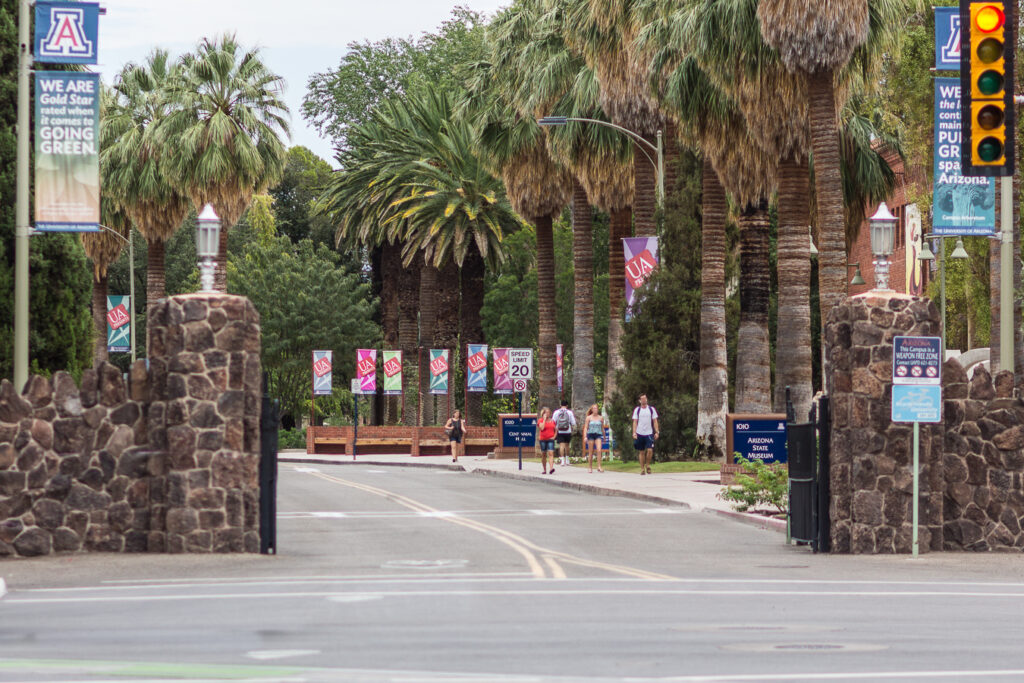
Image result for Arizona State University Tucson gates
The main gates at ASU Tucson, present day)
(Real Tucson)
The university's centennial was coming up in 1985, and to really ring in the big "100" with a bang, Centennial Celebration director Ruth Cross wanted to bring back an honored Tucson institution in time for the festivities. In 1983, she formed the Old Pueblo Trolley (OPT) non-profit to raise funds and coordinate with the city as well as to call on volunteers and equipment to eventually run the railway. Over the next two years, a one-mile stretch of track was recovered from the original Tucson Rapid Transit (TRT) from 5th and Broadway to the main University gate at Tyndall Street. The OPT also has the rare distinction of most its alignment being original street track dug up from the road, rather than being relaid or realigned.

To obtain a streetcar, the OPT turned to the Orange Empire Trolley Museum (OERM) in Perris, California, desiring something small and easy to operate. The OERM chose to lease ex-Pacific Electric Birney No. 332 to the fledgling operation for ten years, on the condition that the OPT restore the car to running order. 

ex-Pacific Electric 332, as Tucson Rapid Transit 10, paused at
the Alpine/Broadway platform at the OERM
(Myself)

Car 332 was originally built by Brill in 1918 for operation on the "boonie" lines in Pasadena, San Bernardino and Redlands, and retired from service in 1940. Following retirement, MGM purchased it and surviving sister 331 for use in films like Comrade X (1940) and, famously, Singing in the Rain (doubling for sister 337, which was sliced in half for interior shots). Following their film service, the cars were purchased by the Southern California Electric Railway Association (SC-ERA) and preserved in Perris, CA. The car would take over six years of hard work to restore out of that ten-year lease but it would first operate on OPT charter and member runs in 1991 as TRT No. 10.

Image result for Singing in the Rain Trolley
Gene Kelly leaps off PE Birney 332's (or 331) roof to land safely in
Debbie Reynold's car in "Singin' In the Rain".
(MGM Studios)

Ex-Hankai 225 operates on the  OPT University Avenue stretch.
(Jack Garcia)
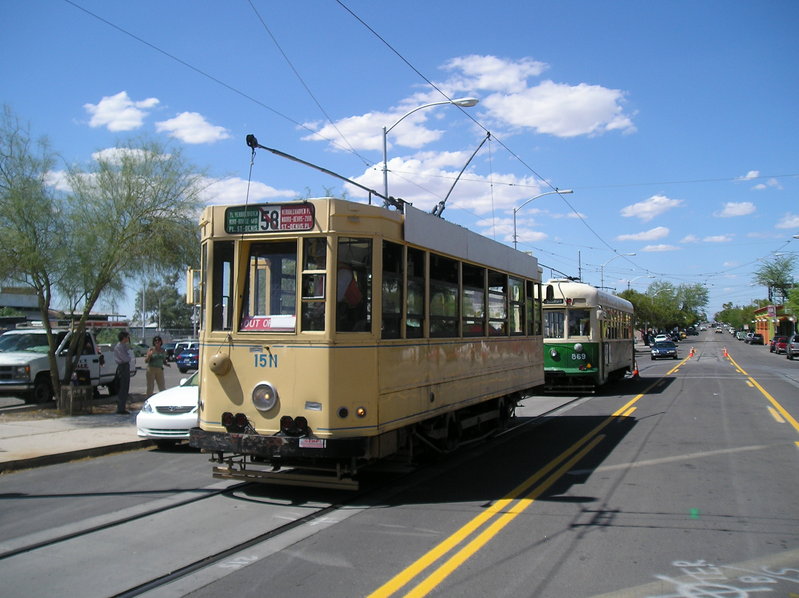
The next year, OPT would purchase ex-Hankai Tramway 255 from Osaka, Japan. This car was significantly younger, built in 1953 as Japanese City Lines 869. Upon retirement in 1992, OPT snatched it up and kept its Hankai Tramway identity. Due to the 869's pantograph and the 332/10's trolley pole, the overhead wire had to be configured primarily for trolley pole use (necessitating staggered and curved wire on corners). Volunteers from the Tucson Electric Power company helped put up the wires.

Public service began in 1993, way past the original centennial celebration, but it was still a cause to celebrate for Tucson: the town had its trolley back. In 1995, Car No. 10 returned to the OERM as the museum did not want to extend its lease, but the car continues to wear the green and cream of the Tucson Rapid Transit as a tribute to the little railway that helped it live again. A nine month period around the same time saw JCL 869 returned to service under its original number and roadname. 

Image result for Old Pueblo Trolley fleet
Ex-Brussells 1511 leads JCL 869
down an unknown Tucson street, 2009
(Ed Haven)
Two more cars would join the fleet: ex-Brussells No. 1511 to replace 332 as the two-axle car, and a Toronto PCC. The Brussells car arrived in April of 1995 from Phoenix, AZ, after a plan to use it as a restaurant went belly-up. Toronto PCC 4608 reached Tucson in June, the next year, and would be gauged down from the weird Toronto-only gauge of 4 feet, 10 7/8 inches. The initial alignment operated until 2009, when an extension and loop was built at 5th avenue via the 4th avenue Underpass. This gave the OPT the ability to meet Amtrak trains and gain more foot traffic for both tourists and locals in the city. Old Pueblo also invested in a large historic bus collection, one of which (Bisbee Lines No. 8 from 1938) was operable by 2018.

Image result for TucsonSun Link
The new Tucson sunlink at ASU's main gate on Park Ave.
(Visit Tucson)

However, trouble was soon brewing. In 2006, the "Sun Link" light rail program was begun after 60% of voters approved of the "Regional Transporation Plan". Much of OPT's single track alignments were now double-tracked across almost its whole route and a new maintenance facility would be constructed close to what is now the OPT's new carbarn. This meant that in 2011, the OPT's poles would go down under a suspension of service. 


In the time since service suspension, the city of Tucson helped the OPT move into a former cabinet shop as their new carhouse in 2014. Currently, the OPT runs historic bus excursions using the aformentioned Bisbee Lines No. 8 (itself a native of Arizona) but hopes to one day continue operations by sharing tracks with the Tucson sunlink. Only time will tell if their poles are raised once again.

Image may contain: sky and outdoor
Old Pueblo Trolley's only operating piece of equipment right now:
a 1938 White Coach Model 1204 for Warren Bisbee Bus Line, Arizona
-----

Thank you for reading today's Trolley Thursday post! If you would like to find out more about the OPT beyond my hackneyed summary of their history, please visit their Facebook page, also follow the Tucson Historic Depot for more information, and as always: donations to them always help get them back on their wheels. As for me, all I can peddle is my Redbubble store if you want my doodles on your bodies. Until next time, ride safe!

Tuesday, March 3, 2020

Trolley Tuesday 3/3/20 - Tucson's First Trolleys

New month, new topics! From the chilly cloudiness of the Pacific Northwest, we descend into the hot, sunbaked deserts of Arizona! This month will focus on Tucson and Phoenix's transit systems as well as modern operations like the Old Pueblo Streetcar. As usual, this is all new territory for me, so I definitely hope you all enjoy what you're reading! For today's Trolley Tuesday, we look at how Tucson's trolley system first started.

-----

Image result for Tucson 1870s
(Jeff Wallace)

1879 brought with it many important events in America: The Transcontinental Railroad had its completion date legally defined, Thomas Edison first demonstrated his incandescent bulbs at Menlo Park, New York's Gilmore Gardens was renamed Madison Square Garden, and the town of Deadwood, South Dakota, burned down with over $3 million in damages. But amongst all the events, a smaller revolution came to the town of Tucson, Arizona: its first trolley line. 

Image result for Tucson horsecar
Horsecar No. 6, sometime after 1900
(University of Arizona)
Entrepnuer Bill Morgan established a "herdic" service in Tucson two years after the town was incorportated. At the start of the decade, the town gained a connection to the West Coast via the San Diego-Tucson telegraph in 1873, but now it had a public transport service. A "herdic" is another word for a "horsecar", being a closed-body carraige on rails. It ran from Downtown to the Nine Mile Water Hole along the Canada de Oro wash. The herdic would be rerouted once in its two decade of operation: when the Southern Pacific arrived in Tucson, the tracks were moved to add a stop at the new train station.

Image result for Tucson Elysian Grove
A headline in the Arizona Daily Star announcing the rebuilding of
an original Elysian Grove building in 1924
(Arizona Daily Star)
In 1898, the Tucson Street Railway (TSR) was established as a mule-drawn street railway. As the town was originally a stagecoach station, it never had any viable commodities to allow for electric streetcar service in a time when almost every electric railway in America was being established. This was also well before any main street in Tucson was paved, which meant pedestrians would often be bogged down in mud or trip over the raised steel rails. Nevertheless, the company managed to ring in the new century with an expansion north and south and even establish their own trolley park called "Elysian Grove."

 The first of the three cars built by Ronstadt, car #8, c. 1906
"The last of the Mule Trolley - Tucson 1906"
(University of Arizona)
By 1904, the TSR had more than eight miles of horsecar track, seven horsecars, and 34 head of livestock in both mules and horses. Unfortunately, the large amount of animals also meant frequent, if not inherent, scheduling issues as streetcar frequencies would always depend on how the animals were feeling that day. The city eventually had enough and, in 1906, forced the TSR to modernise with electric streetcars on heavier rail and running on overhead wire. The company was renamed the Tucson Rapid Transit Company (TRT).

The streetcar proved to be a welcome addition to the town, where car travel was otherwise foreign. In 1915, Tucson had gained a significant chunk of paved road and yet the TRT proved so successful the roster swelled to nine streetcars. Ten years on, three more streetcars were delivered to bring the grand total to twelve, and buses were brought in to supplement service with a consistent 15-minute service interval. Despite the size of the system, it never suffered any heavy line closures or other operational malady that plagued street railways three times its size around the US and continued to trundle along without fanfare until 1930.

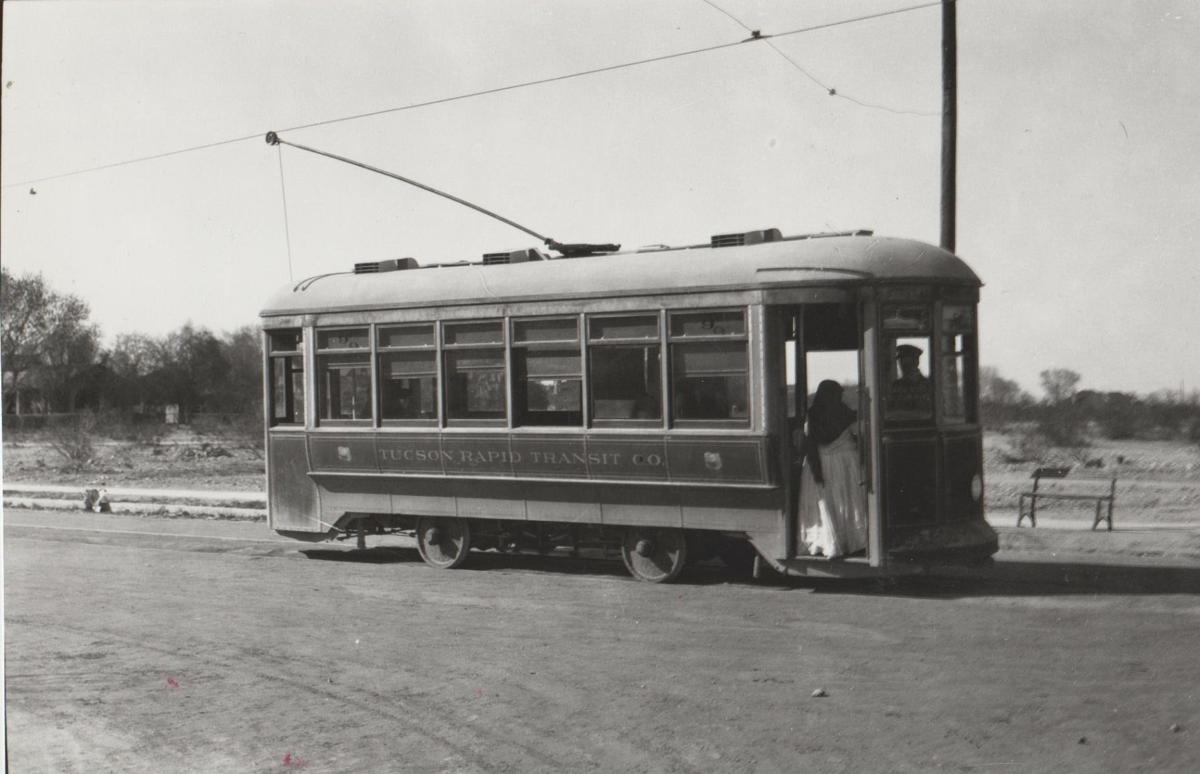
Image result for Tucson Rapid Transit Company
One of the TRT's tiny not-Birneys collecting a passenger. Adorable, isn't it?
(Arizona Daily Star)
That year, the Tucson City Council decided to discontinue streetcar service effective at the end of the year. On December 31, 1930, the last streetcar would roll along Tucson's streets before being shuttered and the tracks were paved over in favor of bus service. As quietly as it began, the Tucson Rapid Transit Company went as quietly for the next fifty years... until 1983, but that's a story for another time. (Shoutout to CGP Grey)

-----

Thank you for starting this new month of Trolleyposting with me, your motorman writer, and Nakkune, my editor. If you would like to financially support this series, please check out my Redbubble store where you can purchase merch made by me and keep this series going. As always, ride safe!